Setting Boundaries Without Burning Bridges: A Freelancer’s Guide

At a glance
Set clear limits on availability, revisions and additional work, then communicate them early. Explain what you can offer and how changes will be handled instead of relying on unspoken expectations.
Why Boundaries Matter in Freelancing
As a freelancer, your time, energy, and mental bandwidth are your most valuable resources. Without healthy boundaries, it’s easy to slip into:
- Working nights and weekends
- Answering texts at all hours
- Saying yes to every “quick request”
- Undercharging or over-delivering
- Resentment and burnout
The truth is, boundaries don’t push clients away—they create better relationships.
They show you’re organized, professional, and serious about delivering great work within a clear, respectful structure.
What Happens When You Don’t Set Boundaries
Let’s get honest: skipping boundaries doesn’t make you a “cool” or flexible freelancer—it makes your work (and your wellbeing) vulnerable.
When you don’t set boundaries, you risk:
- Scope creep
- Blurry work hours
- Constant client pressure
- Mental overload
- Work-life imbalance
Worse? Clients start to expect access at all times, fast turnarounds, or unlimited revisions—not because they’re trying to take advantage, but because you never told them otherwise.
Boundaries aren’t about saying no. They’re about making yes more sustainable.
Where Freelancers Need Boundaries the Most
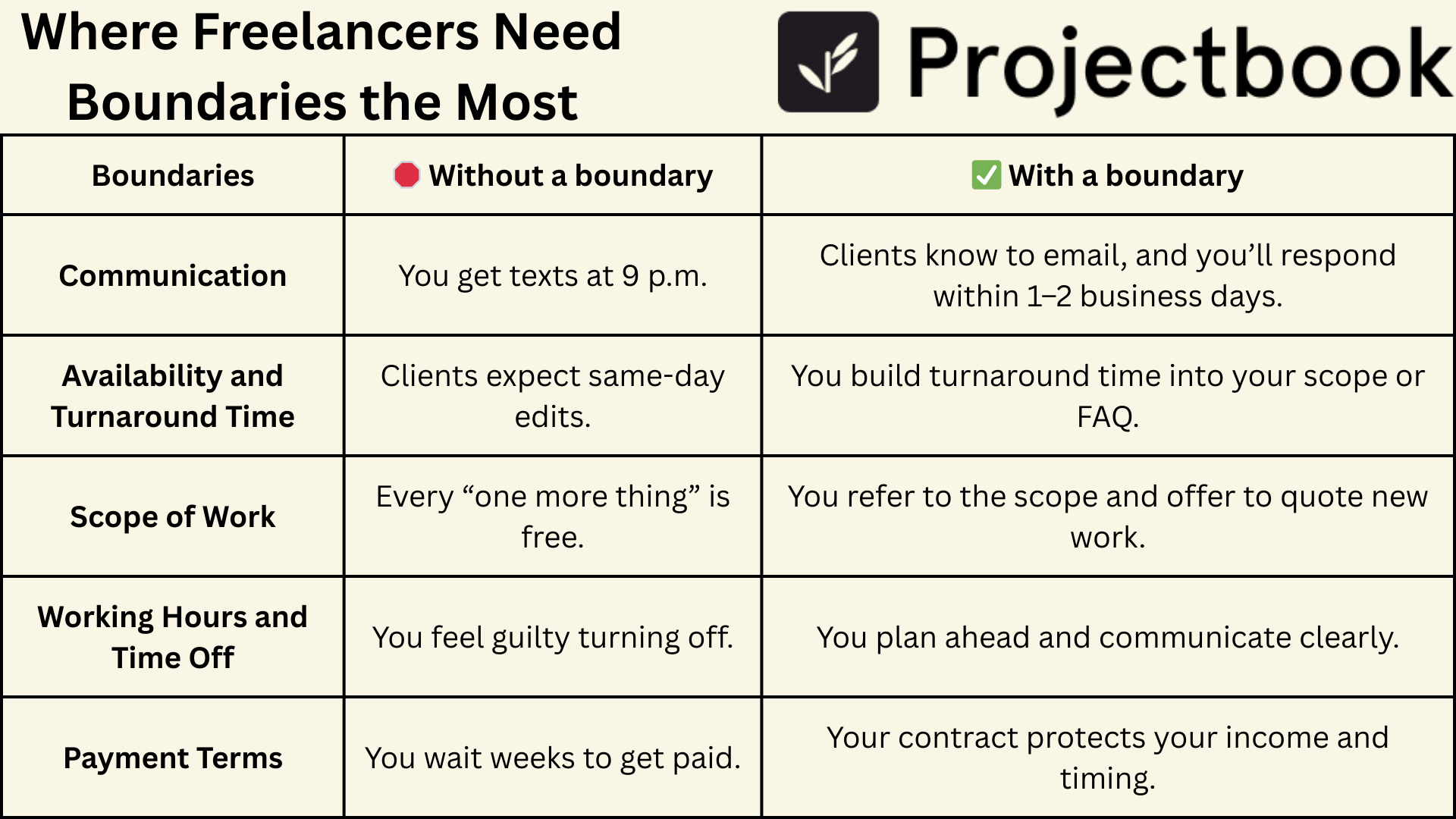
You don’t need rules for everything. But here are 5 common places freelancers benefit from clearer boundaries:
1. Communication
- What channels do you use (email, Slack, Notion)?
- How fast do you respond?
- What are your business hours?
🛑 Without a boundary: You get texts at 9 p.m.
✅ With a boundary: Clients know to email, and you’ll respond within 1–2 business days.
2. Availability and Turnaround Time
- When are you available for meetings or reviews?
- How much notice do you need for new requests?
🛑 Without a boundary: Clients expect same-day edits.
✅ With a boundary: You build turnaround time into your scope or FAQ.
3. Scope of Work
- What’s included in the project?
- How many revisions or deliverables?
- What happens if they need more?
🛑 Without a boundary: Every “one more thing” is free.
✅ With a boundary: You refer to the scope and offer to quote new work.
4. Working Hours and Time Off
- When do you take breaks or vacations?
- Are you available on weekends or holidays?
🛑 Without a boundary: You feel guilty turning off.
✅ With a boundary: You plan ahead and communicate clearly.
5. Payment Terms
- What’s your policy on deposits, late fees, and milestones?
🛑 Without a boundary: You wait weeks to get paid.
✅ With a boundary: Your contract protects your income and timing.
How to Set Boundaries Without Ruining Client Relationships
Setting boundaries doesn’t have to feel harsh or uncomfortable. In fact, most clients **appreciate structure.** It helps them know what to expect.
Here’s how to do it:
1. Be Proactive, Not Reactive
Set boundaries before problems come up. Share your process, timeline, and policies during onboarding—not halfway through the project.
💡 Use a welcome packet or onboarding email with clear expectations upfront.
2. Use Confident, Friendly Language
Instead of apologizing, explain. Boundaries aren’t something to be sorry for.
❌ “Sorry, I’m not available on weekends.”
✅ “I’m offline on weekends so I can show up focused during the week. I’ll review your message first thing Monday.”
3. Make Boundaries Easy to Follow
The simpler your systems, the easier they are to respect. Use a shared dashboard, clear timelines, and agreed-upon revision limits.
💡 With ProjectBook.co, clients always know where things stand—and so do you.
4. Hold the Line (Kindly)
The first time someone pushes a boundary, it’s a test—not a personal attack. Stay kind, but firm.
“That request is outside our original scope—happy to quote it for you!”
5. Create Space for Flexibility
Boundaries aren’t walls—they’re guidelines. You can flex when you choose to, but the baseline should be clear.
“Normally, I need 48 hours’ notice—but I can squeeze this in today for a rush fee if needed.”
Real Scripts You Can Use Right Now
Sometimes, having the right words makes all the difference. Here are a few go-to phrases:
On response times:
“I respond to all client emails within 1 business day—thanks for your patience!”
On scope creep:
“Let me check against our original scope. If this is a new request, I’ll send a quick estimate and timeline adjustment.”
On weekend work:
“I’m unplugged on weekends to recharge, but I’ll jump into this first thing Monday morning.”
On urgent requests:
“Happy to prioritize this! My rush rate applies for turnaround under 24 hours—shall I send the updated invoice?”
On revision limits:
“We’ve completed the two included revision rounds. I’m happy to continue refining—additional edits are billed hourly.”
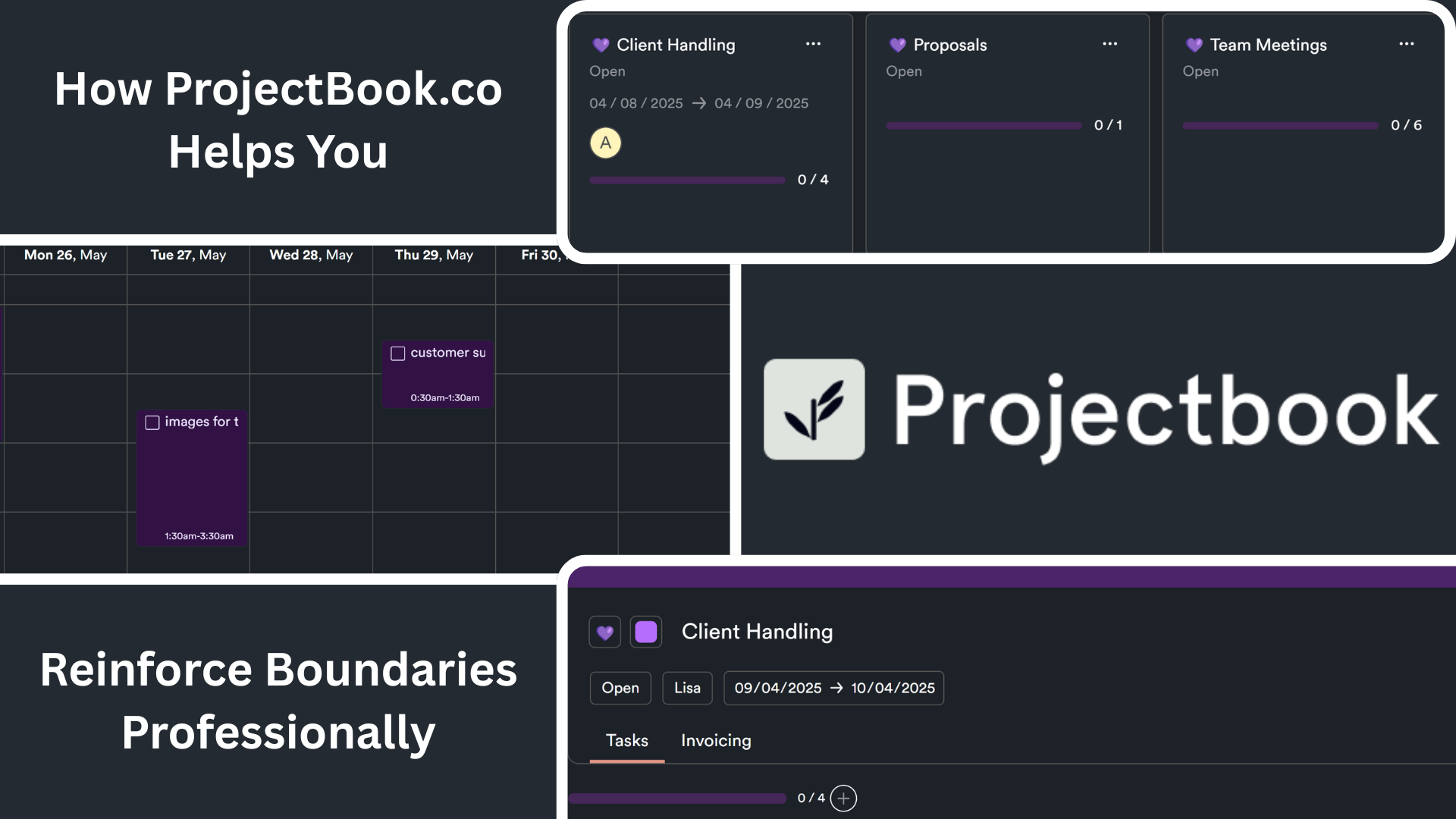
How ProjectBook.co Helps You Reinforce Boundaries Professionally
It’s one thing to say you have boundaries. It’s another to build systems that support them.
Here’s how ProjectBook.co helps:
✅ Scope of work stored inside each project
✅ Task timelines that prevent last-minute pile-ups
✅ Notes to track changes and client requests
✅ Centralized file and feedback hub
✅ Project templates with built-in revision policies or client FAQs
When clients can see the full picture, they’re less likely to overstep—and you’re less likely to feel like you’re scrambling to keep up.
Frequently Asked Questions (FAQ)
What if I’m nervous about setting boundaries with a new client?
Start small. Be clear about your hours and scope from the beginning. Most clients respect boundaries when they’re communicated calmly and early.
How do I reset a boundary that I didn’t set from the start?
Acknowledge it, and course-correct with kindness.
“I realize I didn’t mention this earlier—but I typically reserve calls for Thursdays. Let’s get you booked in then!”
Can setting boundaries lose me clients?
Sometimes—but usually only the wrong ones. The right clients will appreciate your clarity and professionalism.
How can ProjectBook.co support my client boundaries?
ProjectBook.co helps you store scopes, track revisions, manage project timelines, and organize communication—all in one place. That means fewer surprises, better visibility, and easier conversations when boundaries need to be upheld.
What’s the best way to enforce a boundary without sounding rude?
Stick to the facts, use calm language, and offer options when appropriate.
“I can’t meet today, but I have time Wednesday. Want to grab that slot?”
Final Thoughts: Boundaries Make You Better at What You Do
Setting boundaries isn’t about saying no—it’s about saying yes with intention.
Boundaries protect your time, energy, and relationships.
They help you deliver better work, stay sane, and build a business that lasts.
Want a tool that supports the boundaries you set?
Try ProjectBook.co and create a workflow that backs up your values—without the chaos.
From ideas to a clearer week