At a glance
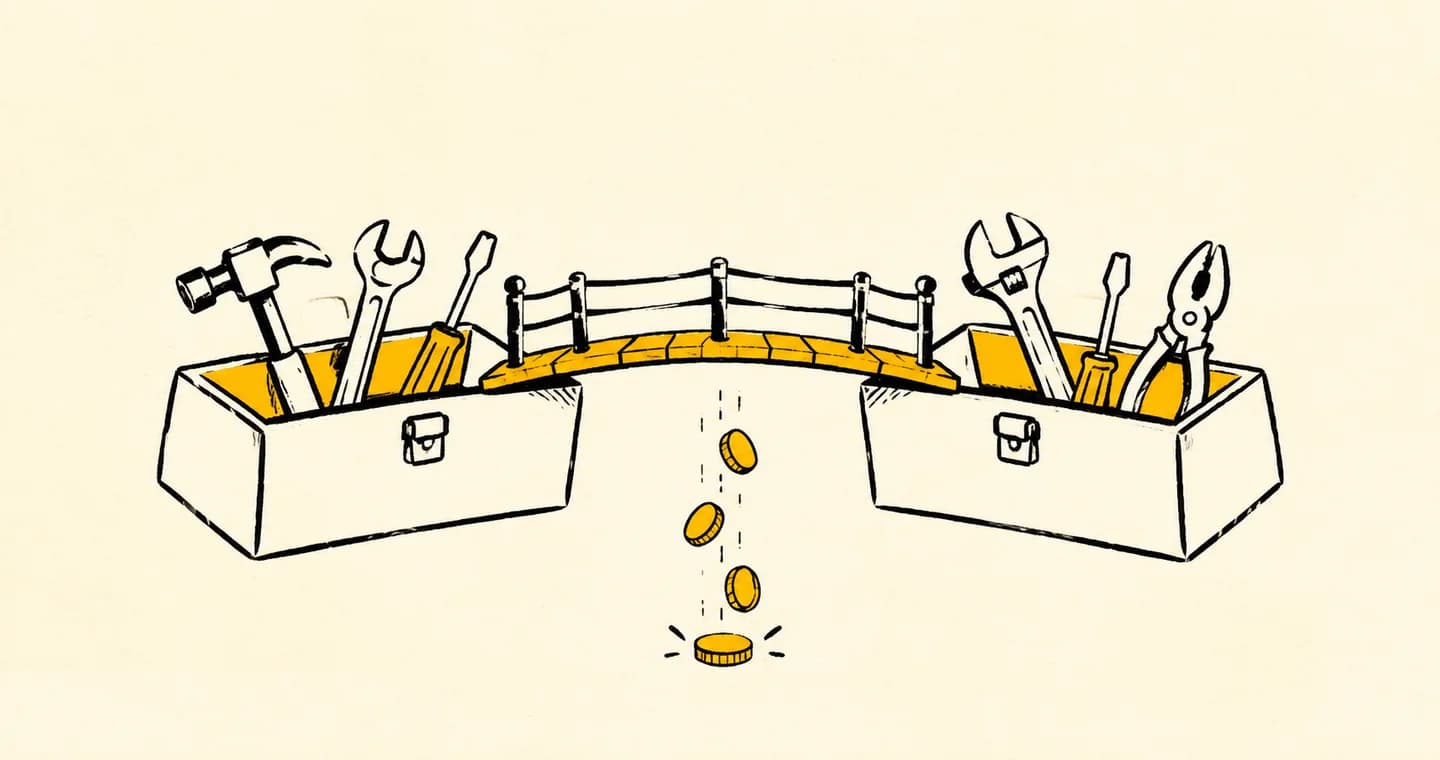
Switching tools costs more than the subscription difference: it can require migration, relearning and process changes. Compare those costs with the specific problem the new tool would solve.
Why We Keep Switching Tools (And Why It Feels Good… at First)
Let’s be honest: discovering a shiny new SaaS tool can feel like productivity crack. A fresh dashboard, clever automations, promises of “saving time”—and suddenly you’re convinced this is the solution that’ll make your business finally feel organized.
But a few weeks later, you hit a limitation… something doesn’t integrate… your workflow doesn’t quite match up. So you start searching again.
If you’ve ever said:
- “This one looked prettier.”
- “That one had better templates.”
- “I just wanted to try something new…”
You’re not alone. But there’s a difference between strategic optimization and habitual switching. One moves your business forward. The other drains time and energy.

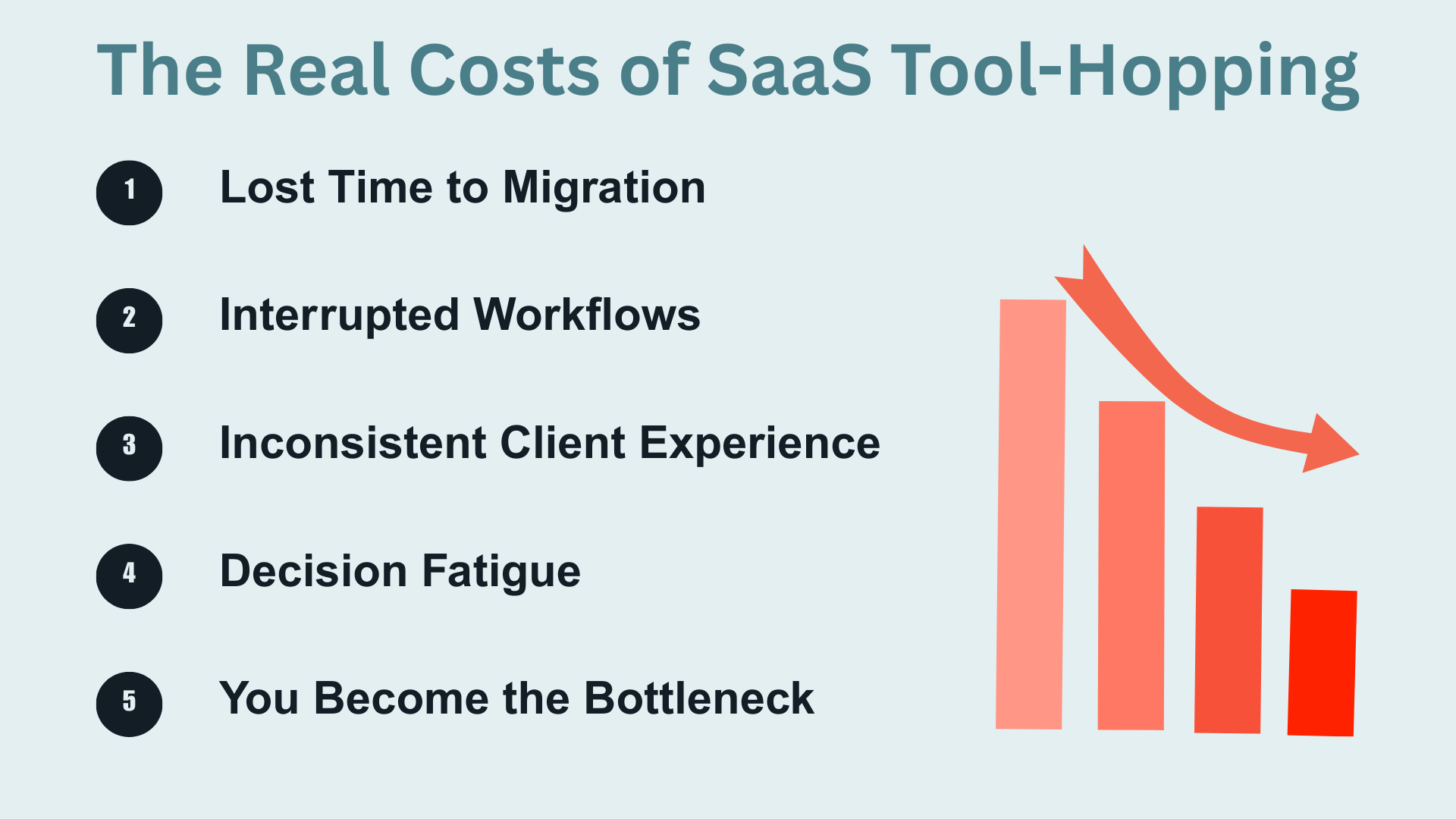
The Real Costs of SaaS Tool-Hopping
Switching tools isn’t free—even if the subscription is. Every platform change costs you in ways that go far beyond your monthly bill.
1. Lost Time to Migration
Exporting files. Importing data. Rebuilding templates. Learning new settings. You lose hours—or days—every time you switch.
And let’s be real: you probably won’t migrate everything. So some of your client history or workflows? They just vanish into a half-finished archive.
2. Interrupted Workflows
Tool hopping disrupts your rhythm. You start to second-guess your process. Clients are confused about where to find things. You don’t feel confident in your own system.
And when things feel messy behind the scenes, it shows.
3. Inconsistent Client Experience
Clients notice when you keep changing systems. They get new logins. New file-sharing setups. Different onboarding processes. It erodes professionalism—and makes your service feel less reliable.
4. Decision Fatigue
Every switch comes with dozens of decisions: Which plan should I choose? How do I set this up? Which integrations are essential? That mental load adds up fast and leaves you feeling stuck.
5. You Become the Bottleneck
When you’re constantly rebuilding your backend, you’re not doing client work, business growth, or taking time off. Your operations become fragile. Everything depends on you to hold it together
Signs You Might Be Stuck in a Tool-Switching Loop
Ask yourself:
- Do you have more than one tool that does the same thing (like task tracking or proposals)?
- Have you changed project tools more than twice in the past year?
- Do you constantly think, “Maybe I just haven’t found the right platform yet”?
- Are your systems half-set up in multiple apps?
- Do clients ask, “Which link do I use again?”
If you answered yes to even a couple of those, you might be stuck in the loop. But there’s a way out—and it’s not downloading another free trial.
How to Audit Your Current Stack (And Stop the Spiral)
Before you make another switch, pause and evaluate:
Step 1: List Your Current Tools
Write down every tool you’re using—project management, time tracking, invoices, contracts, client communication, file storage, etc.
Step 2: Label Each One
Mark whether each tool is:
- Fully in use
- Partially used
- Abandoned
- Redundant with another tool
Step 3: Get Honest About Friction
Why are you looking for something new? Is it really about features—or about clarity, simplicity, or confidence in your process?
Step 4: Ask What Would Make You Stay
If your current tools were set up perfectly, would they work for you? Or are you just outgrowing them? This helps you choose between optimization and replacement.
What to Look for in a Sustainable Business Management Tool
Not every SaaS platform will be a fit—but there are red flags and green lights to watch for.
✅ Look for:
- Simple onboarding that doesn’t require a full-time ops manager
- Just enough features—not overwhelming bells and whistles
- Support for your core workflows (like onboarding, tracking, and communication)
- A clear layout you’ll actually use daily
- Scalability, if you plan to grow your client base
🚩 Watch out for:
- Endless customization with no templates
- Constantly shifting features or pricing
- Tools that require 5 integrations to work
- Dashboards that feel like a maze
Remember: the best tool isn’t the fanciest. It’s the one you’ll actually use—and that grows with your business, not against it.
Why ProjectBook.co Helps You Build Stability, Not Chaos
At ProjectBook.co, we designed our platform to be the tool you don’t need to switch from.
It’s built for solo business owners and small teams who need:
✅ A clean, customizable project dashboard
✅ Easy client organization—files, notes, and tasks in one view
✅ Lightweight proposal and onboarding workflows
✅ Built-in structure, without the bloat of enterprise platforms
✅ Stability—no constant pivots or feature changes
Whether you’re managing two clients or twenty, ProjectBook.co gives you a calm, consistent space to run your business—without app fatigue or confusion.
Frequently Asked Questions (FAQ)
Why do I keep switching business tools?
Most people switch tools because they’re overwhelmed or unclear on their current system. New tools offer a “fresh start,” but often recreate the same problems without solving the root cause: disorganization or misalignment.
How many tools should a solo business owner use?
Ideally, fewer than 5 core tools. Look for platforms that combine multiple functions (like client management, project tracking, and documentation) into one. That’s where all-in-one tools like ProjectBook.co shine.
How do I migrate without losing time?
Plan before you switch. Set a migration weekend, define what data matters, and create a checklist. But better yet—only switch if the gain outweighs the transition cost.
Should I keep using a tool that works “okay” or find the perfect one?
If “okay” means inefficient or hard to use, it may be time to switch. But beware of chasing perfection—look for consistency, simplicity, and long-term fit, not shiny new features.
What makes ProjectBook.co different from other SaaS tools?
ProjectBook.co offers the core tools freelancers and small business owners need—without the fluff. It’s focused on helping you manage clients, track projects, and stay organized—without switching tools every few months.
Final Thoughts: Don’t Let Tools Become the Work
Switching tools can feel productive. But often, it’s just a distraction in disguise.
The real win isn’t in having the latest app—it’s in having a system that works. One that gives you confidence, consistency, and headspace to do your actual job.
Ready to stop the SaaS switch spiral?
Try ProjectBook.co today and simplify your systems, one calm dashboard at a time.
From ideas to a clearer week