What Is a Project Intake Process? (And How to Build One That Works for Solo Businesses)

At a glance
An intake process collects the information needed to decide whether a project is a fit and how to begin. Capture goals, scope, timing, budget and decision-makers before committing to delivery.
You know that feeling when a new client shows up in your inbox, ready to get started... and you're not sure what happens next?
Do you reply right away? Do you send a questionnaire? Do you hop on a call to figure it all out?
That in-between moment is exactly where a strong project intake process can make your life a lot easier.
What Is a Project Intake Process, Exactly?
A project intake process is a repeatable set of steps that helps you gather the right information from a potential client before officially starting a project. Think of it as a filter, an onboarding tool, and a first impression all rolled into one.
It's not just about asking for the project scope or the client's goals. It's about setting up a clear, thoughtful entry point into how you work. It helps you:
- Understand whether the project is a good fit
- Set expectations around timeline, budget, and communication
- Reduce back-and-forth emails
- Feel in control of the process from day one
For solo business owners, especially those juggling multiple roles (sales, service delivery, admin), this process can be a lifesaver.
Why Your Solo Business Needs One
If you're used to flying by the seat of your pants when new projects come in, you're not alone. Many freelancers start their businesses this way: taking whatever comes, figuring it out as they go.
But over time, that approach becomes exhausting. You start noticing the red flags too late. You spend hours writing the same emails, repeating yourself in meetings, or onboarding clients in a way that feels totally custom—every single time.
A project intake process solves that. It doesn't make your business impersonal—it makes it consistent. It frees up your energy so you can focus on doing great work, not playing email tag.
What a Simple Project Intake Process Looks Like
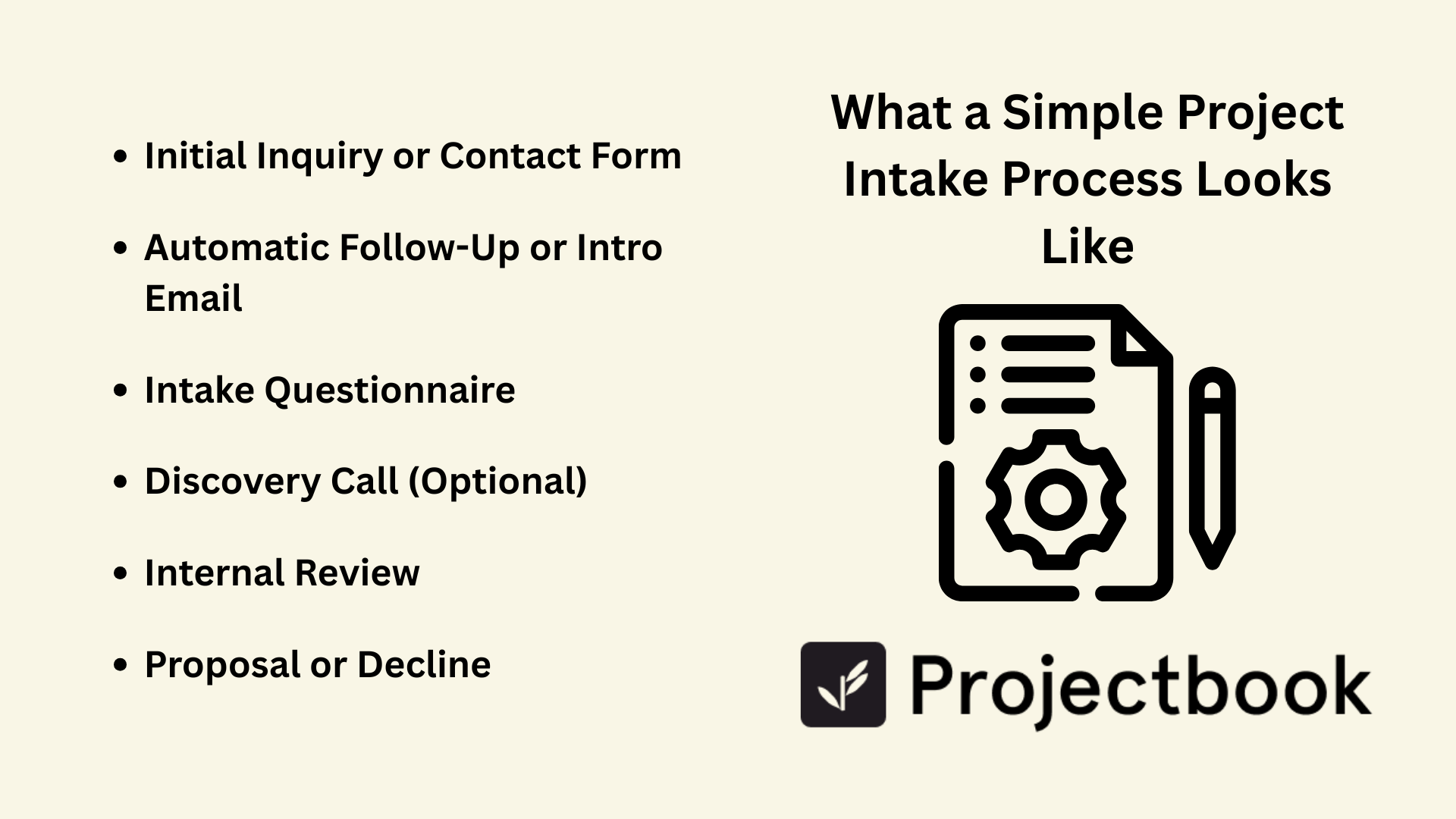
There’s no one-size-fits-all format, but a typical project intake process for a solo business might include:
- Initial Inquiry or Contact Form
- A potential client finds you and submits a form through your website or ProjectBook intake link.
- Automatic Follow-Up or Intro Email
- You thank them for reaching out and let them know what happens next. In ProjectBook, you can create email templates and automate next steps.
- Intake Questionnaire
- A short, clear form that helps you understand what they need, their budget, their timeline, and their goals. You can create this once and reuse it in ProjectBook.
- Discovery Call (Optional)
- If the project looks promising, you schedule a quick call to ask deeper questions and align on expectations. Add it as a task with reminders.
- Internal Review
- You take time to decide: Is this a good fit for your skills, bandwidth, and business goals? Use ProjectBook’s tagging and notes to evaluate new leads.
- Proposal or Decline
- You either send a proposal (via your stored template in ProjectBook) or politely decline (and tag the lead for potential future outreach).
How to Build One That Works for You
The key is to build something you’ll actually use. Your intake process should feel natural—not like a bunch of extra admin.
Start with what’s already working. Do you always ask the same five questions in discovery calls? Turn them into a form. Do you find yourself rewriting the same email over and over? Make it a template.
Then, add structure where it helps. With ProjectBook.co, you can:
- Create and share branded intake forms
- Auto-organize new leads into your CRM-style dashboard
- Link new leads to projects and assign start dates
- Use client tags to sort by service, lead status, or priority
You don’t need complex software or a bloated tech stack—just a clear system built for solo workflows.
Intake Isn’t Just About Projects—It’s About People
One of the most overlooked benefits of a good intake process is how it strengthens your client relationships. When someone reaches out and gets a clear, confident response from you, they immediately trust your process. It shows that you’re organized, intentional, and professional.
That first impression isn’t just surface-level—it sets the tone for how the entire project will run. And for clients who may be anxious or unclear about what they need, your structure gives them something to lean on.
Red Flags Your Intake Process Can Catch Early
A good intake process doesn’t just streamline your work—it also protects your time and energy. Here are a few common client red flags that a strong intake system can help you catch early:
- Vague or unrealistic project descriptions
- Unclear budgets or unwillingness to share one
- Rushed timelines with no flexibility
- Poor communication or long delays in replying
- Resistance to your process or forms
When you build your intake questions thoughtfully, you can spot misalignments before they become headaches.
You Don’t Need to Be “Big” to Act Like a Pro
A lot of freelancers hesitate to put systems in place because it feels like overkill. Like, “I’m just one person—do I really need all this?”
But here’s the truth: systems are what make solo businesses sustainable.
Having a project intake process doesn’t mean you’re turning into a robot. It means you’re respecting your own time, setting your clients up for success, and creating a foundation that can scale when you’re ready.
Try It in ProjectBook.co
At ProjectBook.co, we’ve built our tools with freelancers and solo professionals in mind. Here’s how we support a smooth intake process:
- Helpful Backlog: Keep tasks organized and nearby with our task backlog.
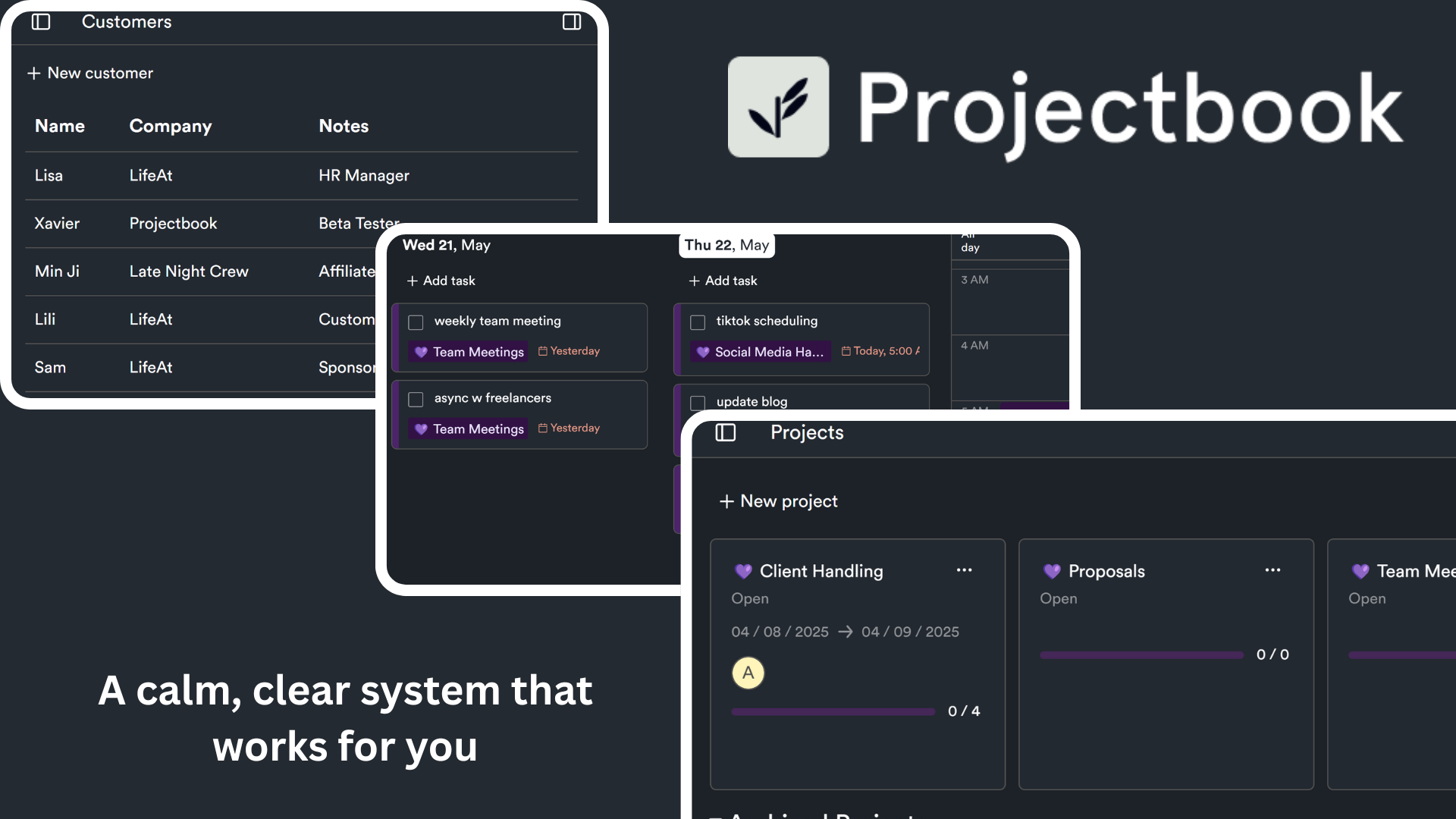
- Client Dashboard: See all incoming leads, active clients, and completed projects at a glance.
- Reusable Proposal Templates: No need to start from scratch each time—store and personalize proposals quickly.
- Timeline View: Visualize client workflows from inquiry to delivery.
- Client Tagging: Keep track of your most valuable leads, types of services, and project stages.
Instead of cobbling together spreadsheets and email threads, you’ll have one calm, clear system that works for you.
Q: How long should an intake form be?
A: Keep it short and purposeful—enough to understand the client’s needs, but not so long it scares them off. Think 5–10 focused questions.
Q: What if a potential client refuses to fill out my form?
A: That’s a signal in itself. If someone won’t follow your process from the start, they may not respect your boundaries later either.
Q: Should I do a discovery call for every project?
A: Not necessarily. If your intake form gives you everything you need to make a decision, you can skip the call or save it for higher-budget projects.
Q: Can I reuse my intake process for repeat clients?
A: Absolutely! In ProjectBook, you can duplicate project templates, reuse client tags, and keep notes from previous projects all in one place.
Q: How does this help me with scope creep later?
A: By clarifying project goals, timelines, and deliverables up front—and keeping everything documented in one platform—you’re setting boundaries early and avoiding assumptions that lead to extra work.
From ideas to a clearer week